Project Updates
Weeks 7–9: Full Build Phase Underway
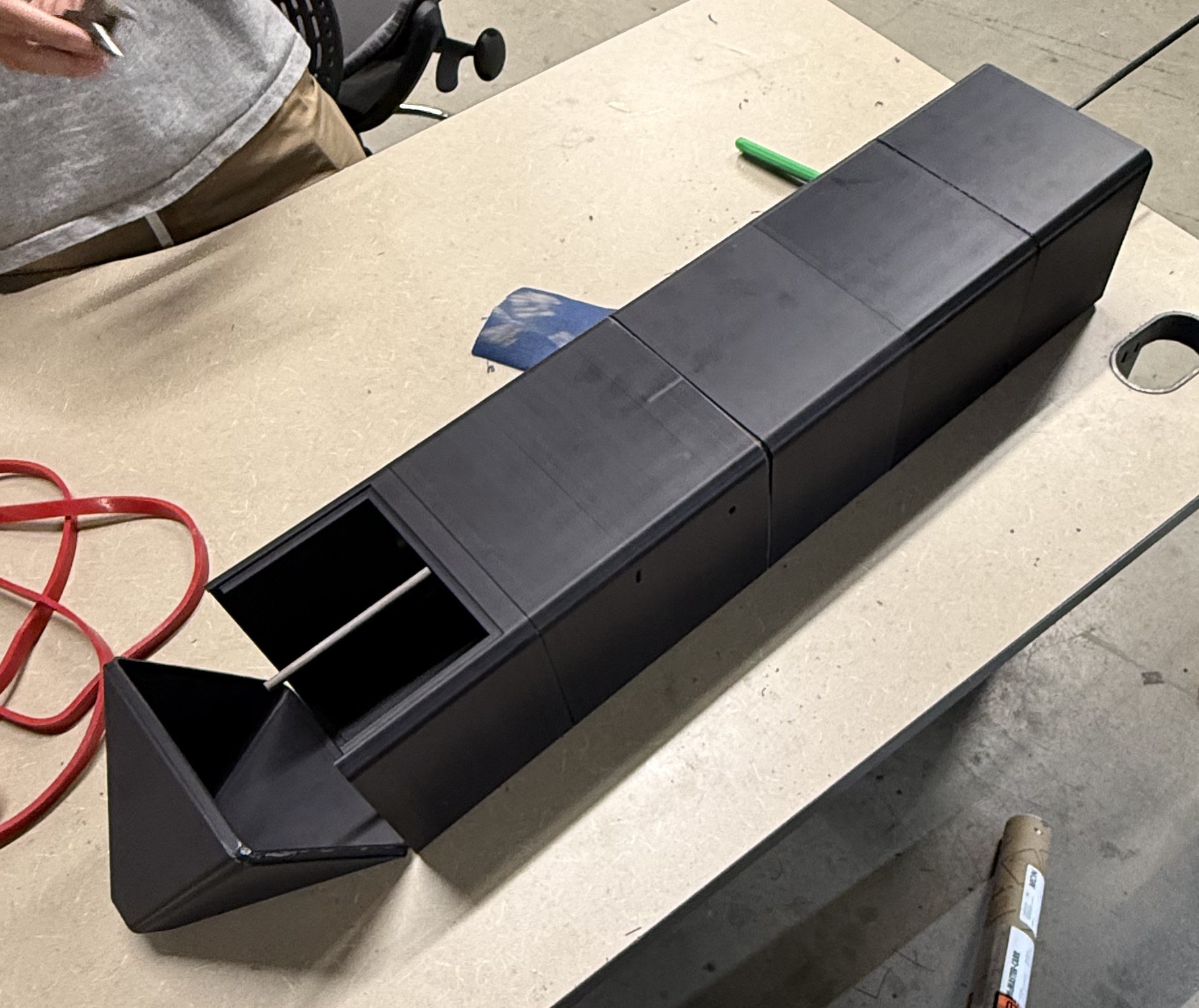
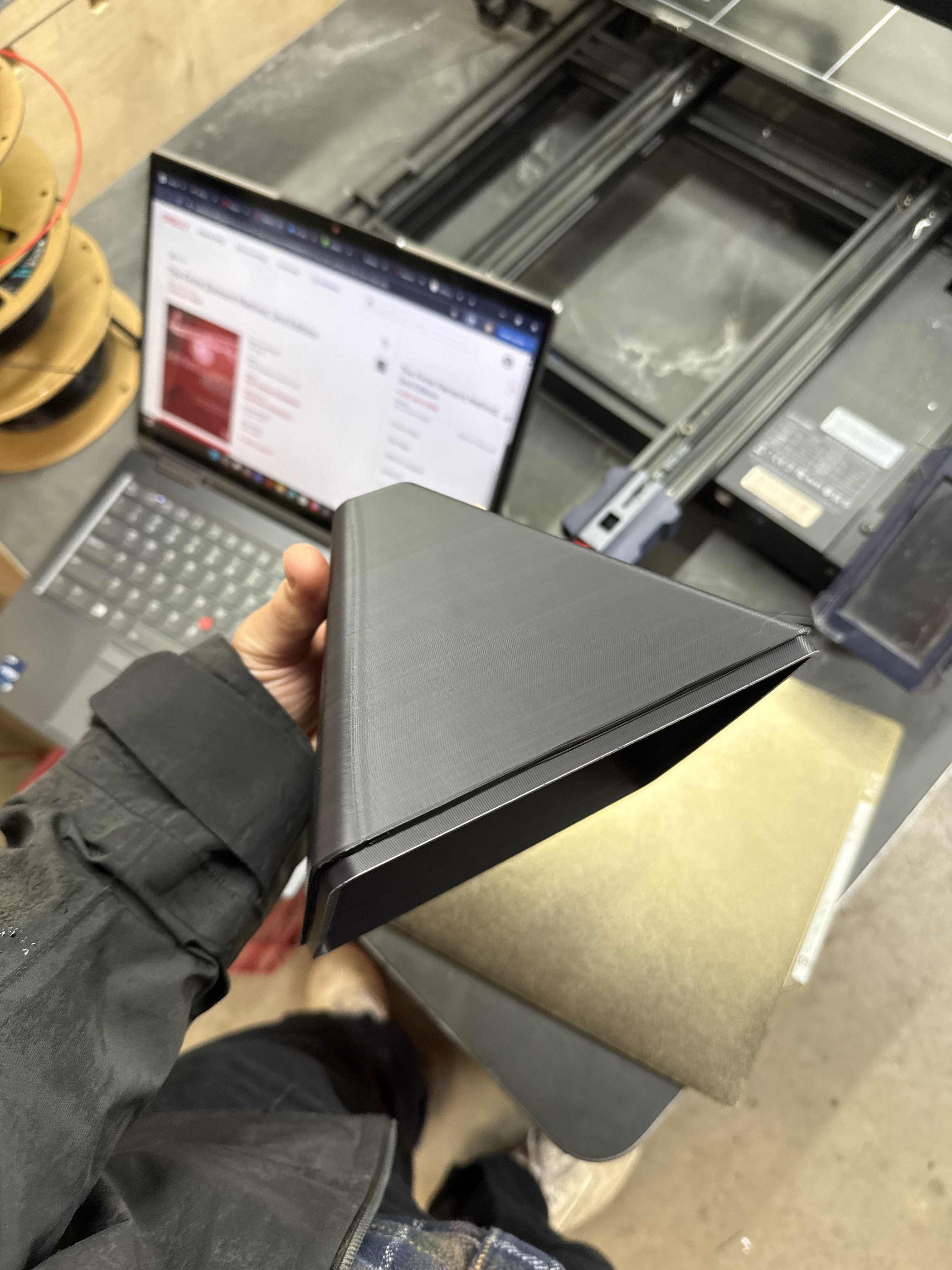
To cut down on print times and eliminate dependence on shared lab printers, the team purchased a Bambu Lab P2S — dramatically reducing turnaround per part. Fuselage sections 1–4 and section 6 are complete (40 hrs done); nose cone and section 5 are still printing, with wings and tail queued after. Wiring diagram finalized. Control surfaces designed and nose cone redesigned; servo hatches in progress.
Bench testing motors underway — measuring thrust output, amp draw, motor and ESC temperature, and checking for voltage sag under load. Full system integration bench test planned once remaining parts arrive. Still on order: Pixhawk 6C, 3DR Radio Telemetry Kit, RadioMaster ELRS Receiver.
Weeks 5–6: Parts Arrived, Printing Started
Motors, ESCs, batteries, propellers, carbon fiber spars, and all filament arrived. Nose cone, fuselage sections 1–3, and wing section 1 completed on the printer.
Week 4: Design Finalized, Proposal Submitted
Design locked: FX 63-137 airfoil, AR=5.4, 5.4ft wingspan, 4-motor distributed propulsion. Full SolidWorks assembly completed. Proposal submitted and approved.
Weeks 1–3: Research & Trade Studies
Researched historical WIG vehicles (Caspian Sea Monster, Lun class, Orlyonok). Completed airfoil trade study comparing FX 63-137, NACA 4412, and GAW-1. Selected FX 63-137 for its superior low-speed high-lift characteristics.